Redesign of Dabang’s
Property Detail Page
Overview
B2C
2021
iOS ・ Android ・ Web
Roles
UI ・ UX design
Lo-fi & Hi-fi prototyping
Interaction design
Tools
GA
Figma
Protopie
Dabang is one of South Korea’s leading real estate platforms, enabling users to easily search, compare, and contact agents for a wide range of properties, including apartments and studio units.
Overview
Dabang is a Korean real estate platform targeting the 20s–30s generation.
I identified usability issues on the property detail page, which receives the highest volume of user traffic, and improved the overall UX and UI.
By following a newly established design guide, I ensured consistency in visual style and usability across the platform.
Problems
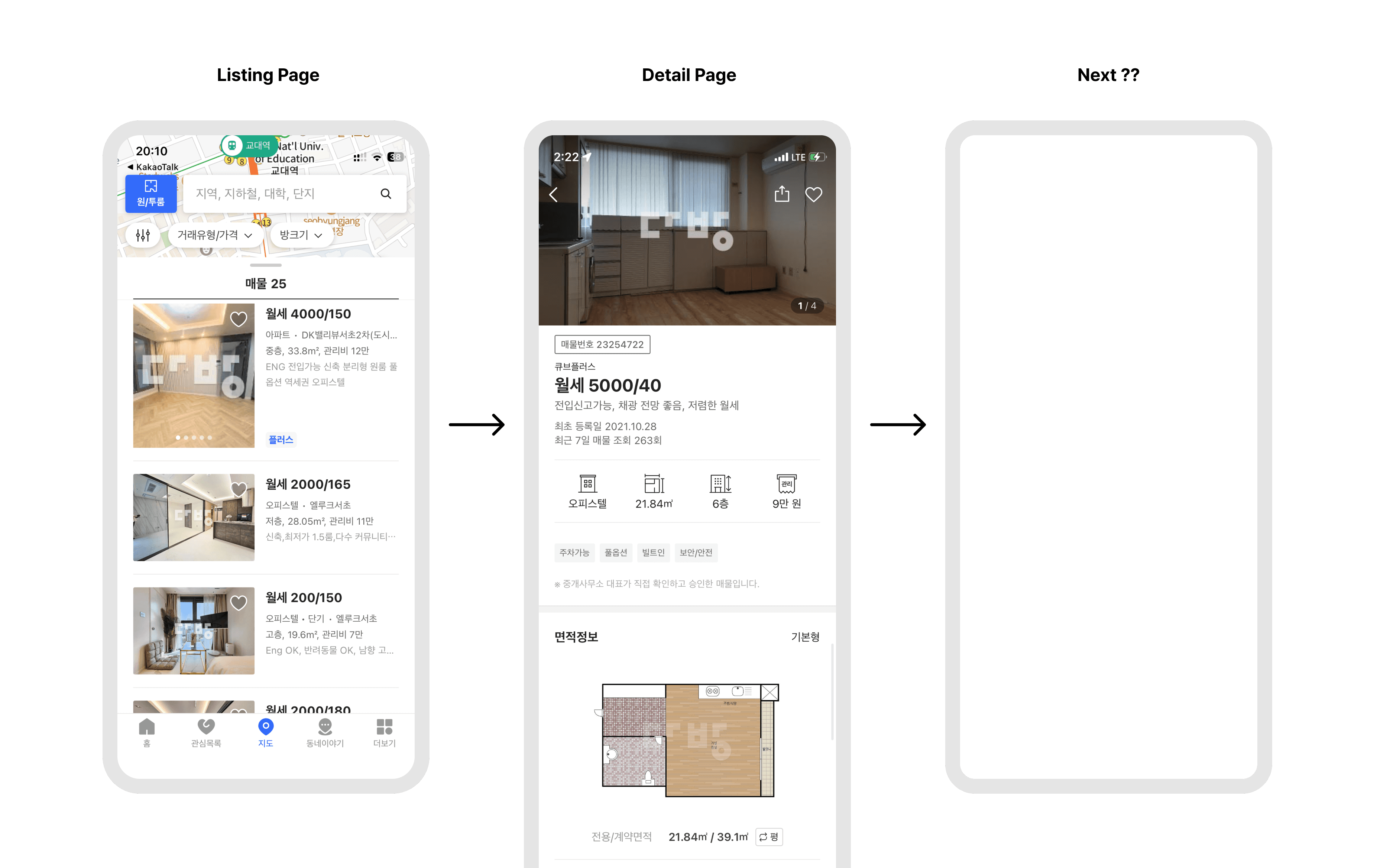
The listing detail page in Dabang is the most highly visited page in the service and serves as a key screen where users can comprehensively review property information.
Despite being a space where important business-driven elements are concentrated, conversions to follow-up user actions remained weak, highlighting the need for improvement.
Observation
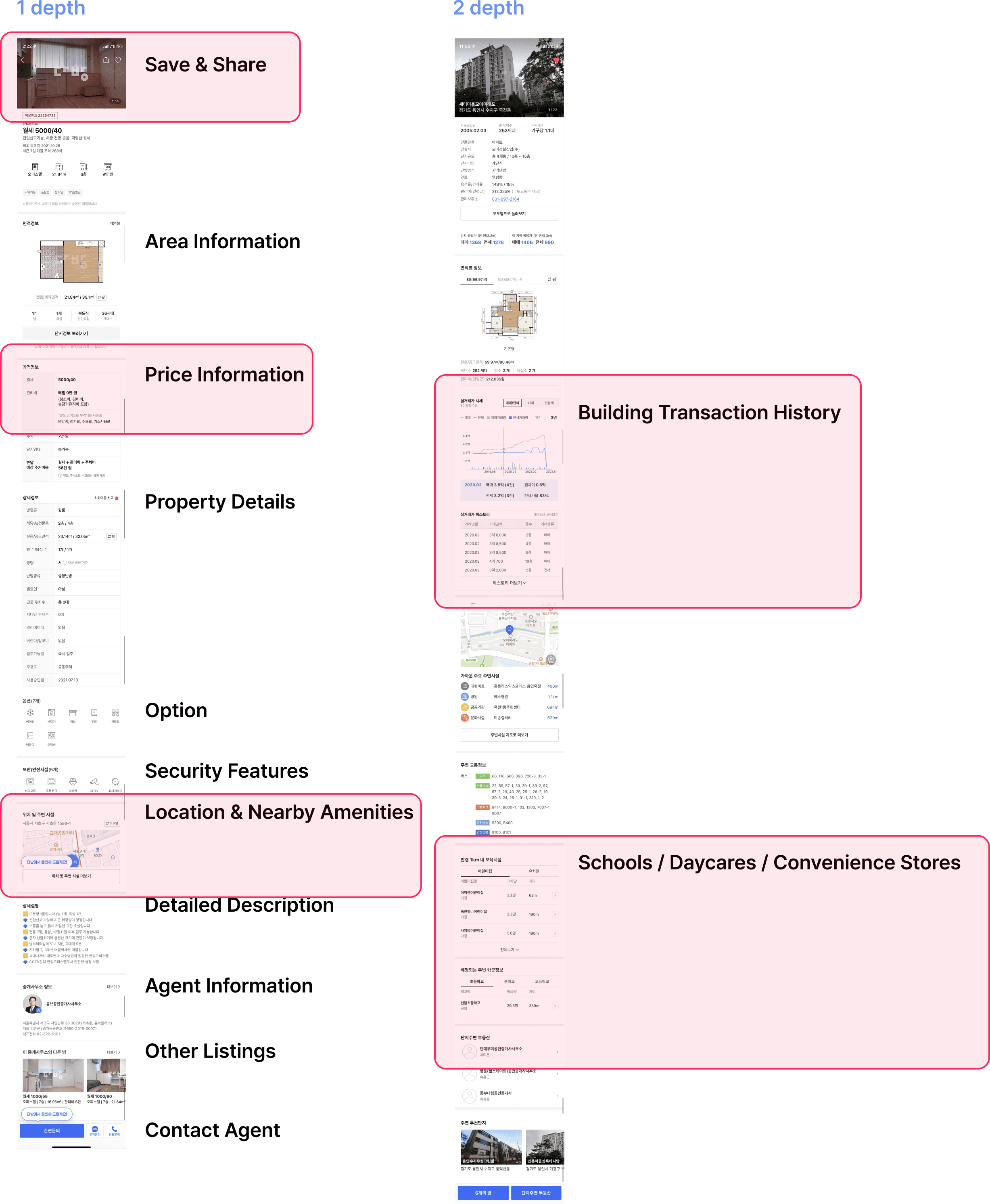
I analyzed user behavior patterns within the property detail page
Insight 1
Users saved properties using the “Like” feature and revisited them later, indicating that the property detail page should act as a conversion point toward agent contact.
Insight 2
Key decision-making information was scattered across the page, causing repeated scrolling and disrupting users’ decision flow.
Solution
1
Rebuilt screens using the design system
Reconstructed key screens with the design system, reorganized information hierarchy based on data importance, and added UX enhancements to improve accessibility.
2
Surfaced complex information at the property detail level
Enabled users to access complex, multi-depth information - previously buried behind multiple steps - directly on the property detail page, along with improved data visualizations.
3
Improved engagement through wishlist interactions
Enhanced wishlist interactions to drive traffic to the saved listings page and made it easier for users to contact agents after viewing the same property multiple times.
Problem Solves & Design
Improving Navigation
Through Clear Information Hierarchy
Before
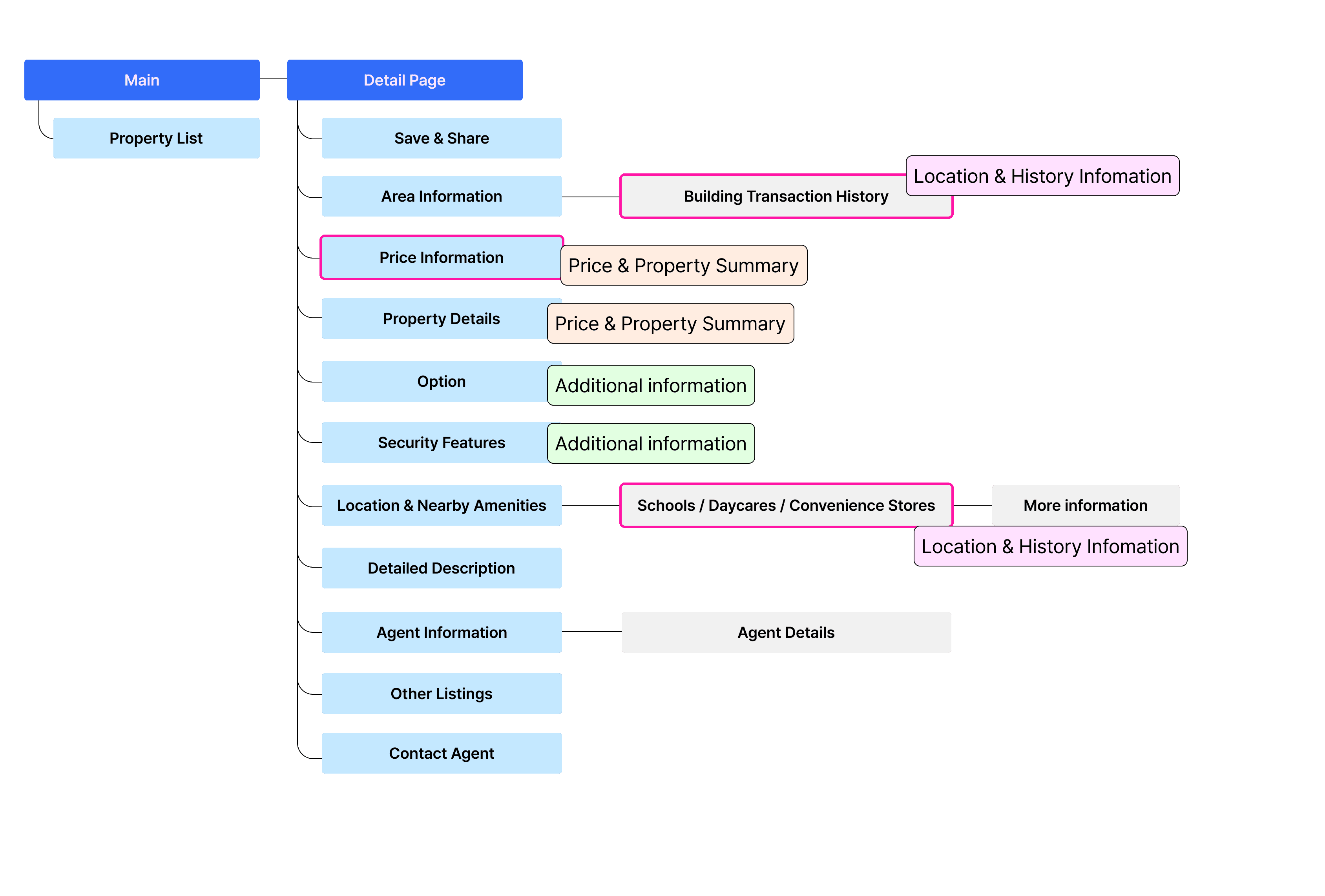
Key information was fragmented across the page, leading to repetitive scrolling and frequent interruptions in users’ decision-making flow.
After
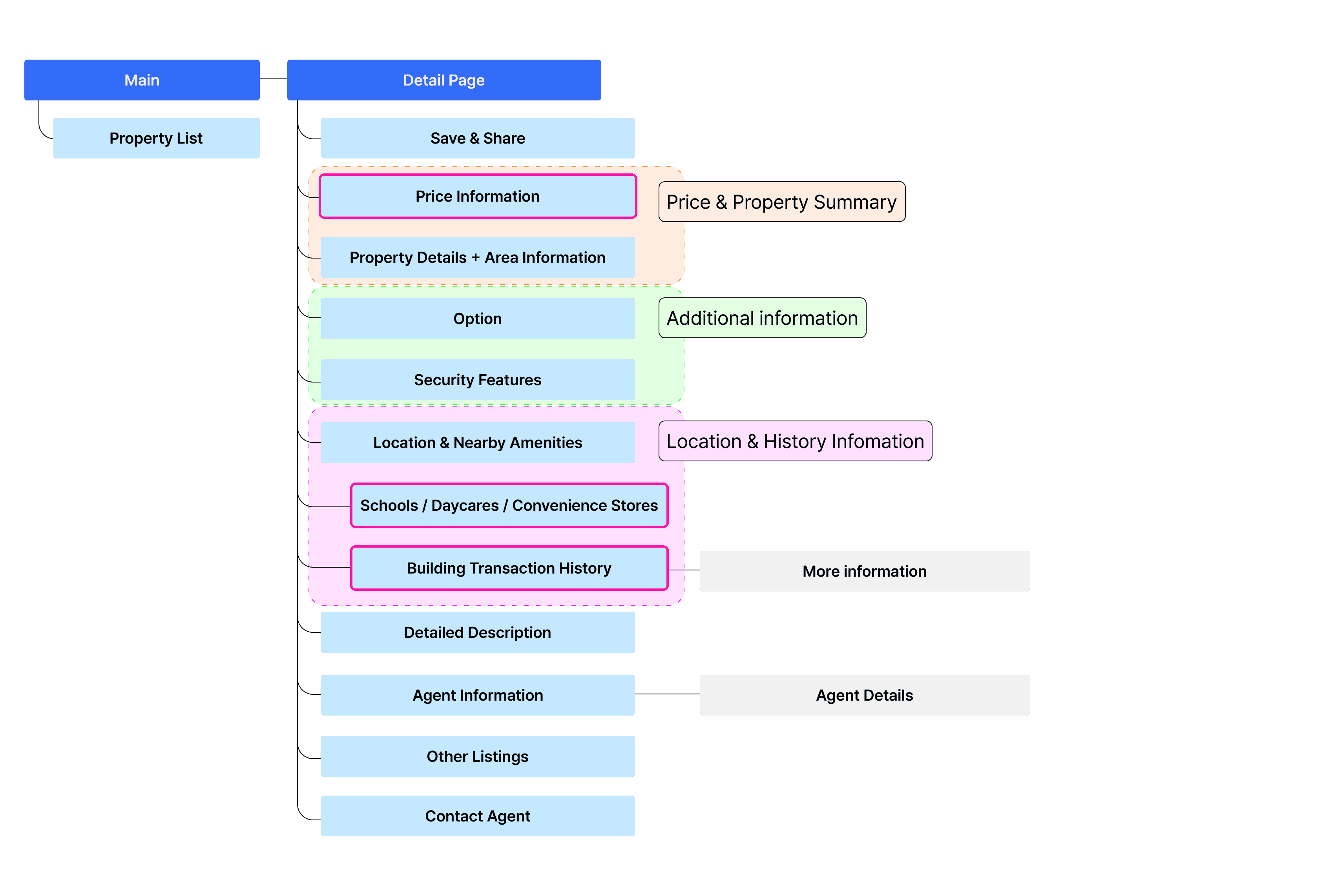
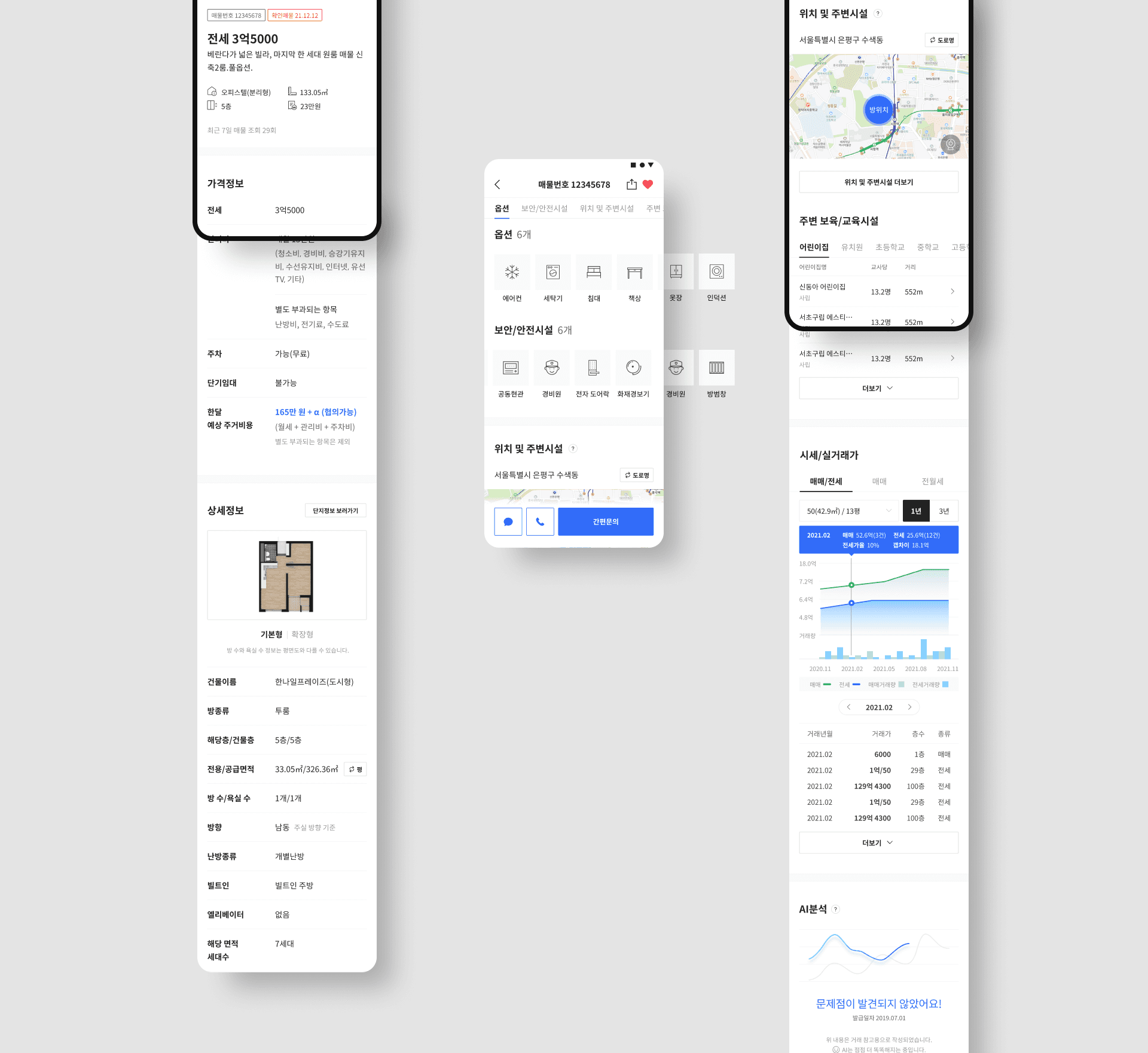
Information was reordered according to priority and user journey, reducing navigation friction and making the page easier to explore.
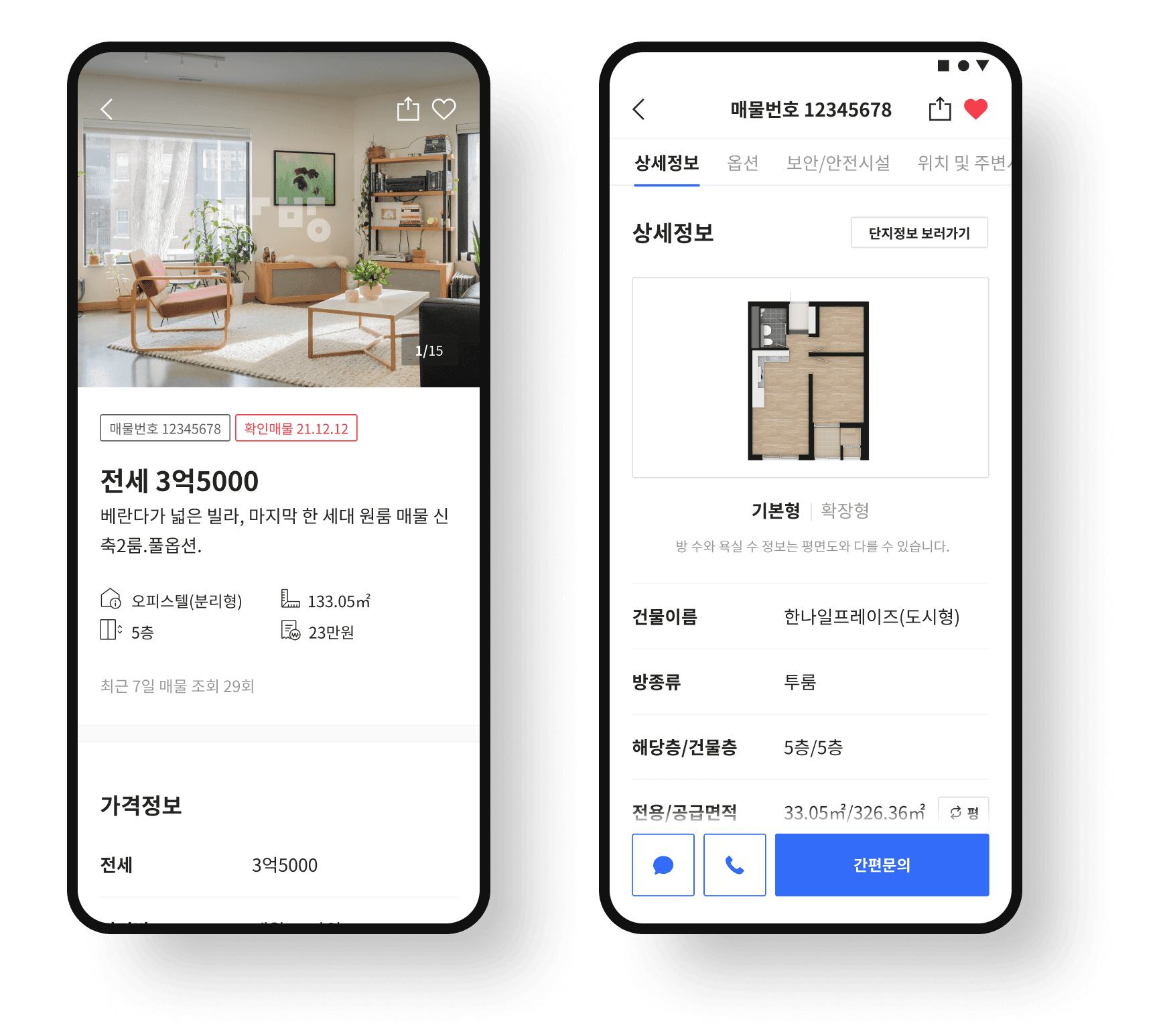
High-priority data was surfaced at the top of the page, and redundant information was consolidated.
CTA buttons were hidden on initial entry to allow more content to be viewed, then revealed on scroll to create emphasis through interaction.
A top navigation was introduced to improve access to key sections.
Based on user behavior analysis, nearby amenities and transaction history were identified as key decision-making information previously located at a second depth.
This information was surfaced on the property detail page to improve accessibility, while enabling a natural transition to deeper exploration when needed.
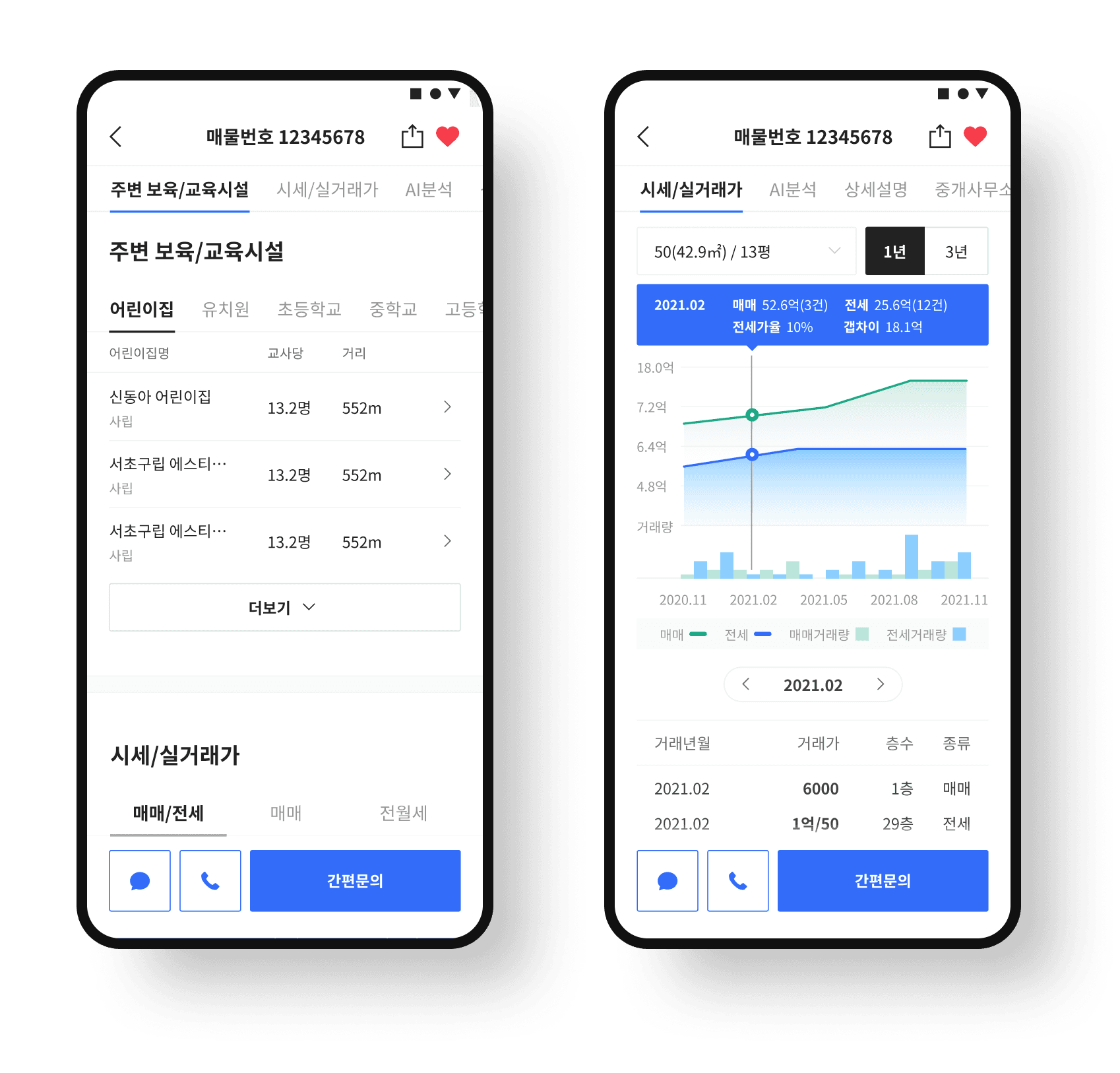
Before
It was inconvenient that area information and transaction history could not be viewed together at a glance.
The chart and graph animations for transaction data were not smooth, which could become a visual distraction.
After
Displayed area information and floor space details together to improve spatial understanding and overall accessibility.
Improved the graph interface and provided a structured list view alongside it to enhance clarity and ease of use.
Improved engagement
through wishlist interactions
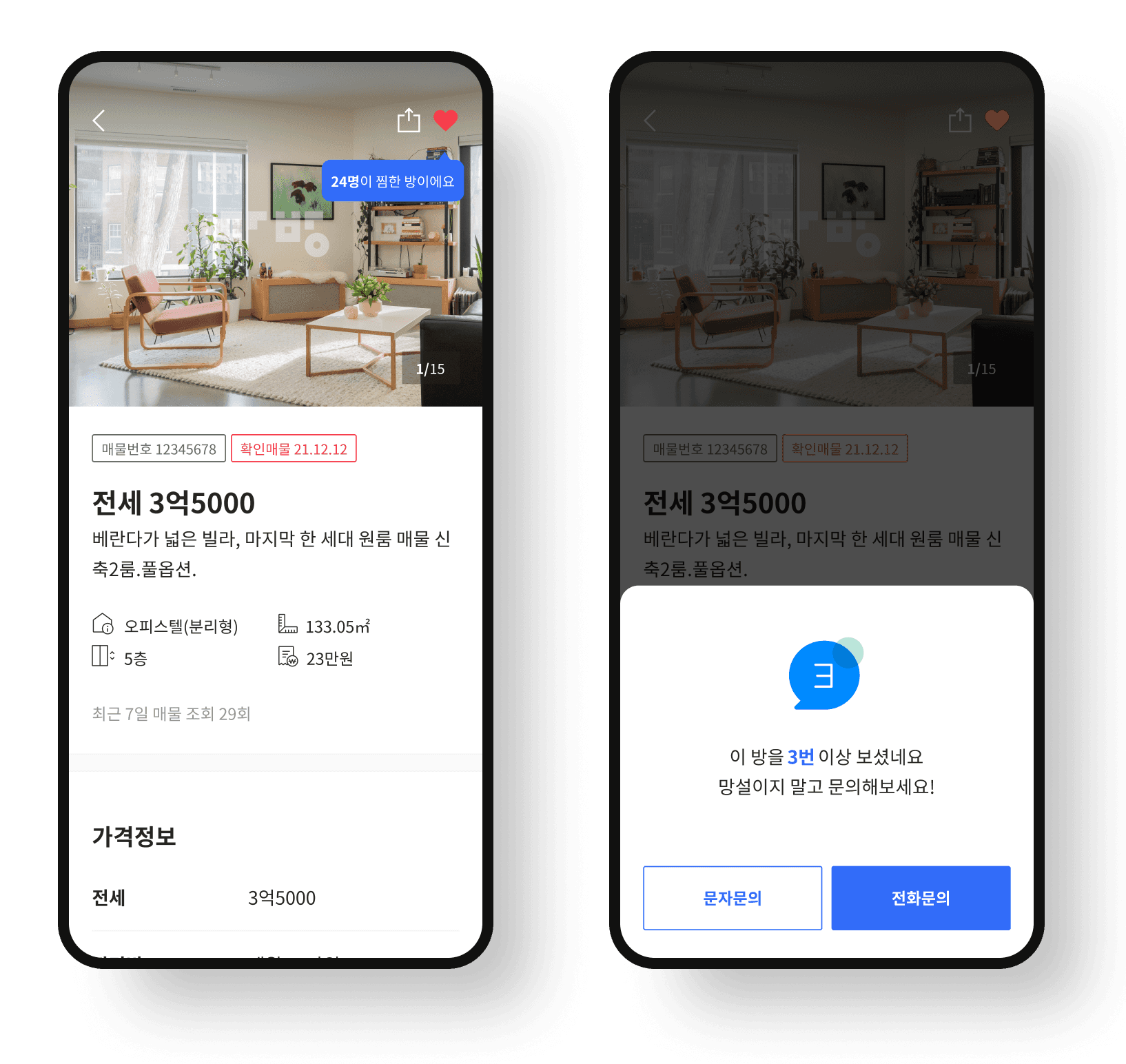
Enhanced wishlist interactions to increase traffic to the saved listings page, and improved the UX to nudge users toward contacting agents after viewing the same property three or more times.
Impact
0%
0%
increase in agent contact
Introduced a new prompt encouraging users to contact agents after viewing the same property three or more times.
As a result, the average number of agent contacts per user increased from 2.3 to 2.8 (+21.74%).
0%
0%
increase in complex detail page visits
Previously, market price and transaction history data were only accessible from the complex detail page.
By surfacing this data on the property detail page and improving navigation, visits to the complex detail page increased from 1.1 to 1.8 per user (+63.63%).
0%
0%
increase in wishlist usage
Enhanced wishlist interactions for properties saved more than 11 times.
This led to an increase in average wishlist interactions per user from 6.8 to 7.5 (+10.29%).

Other Projects